BIBLE PHOTOGRAPHS
CAPERNAUM
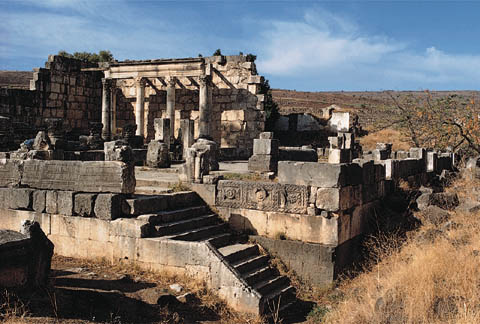
Only a few ruins remain to indicate the site of the city where the Savior performed many of his miracles.
|
Capernaum, located on the north shore of the Sea of Galilee, was the center of Jesus’ Galilean ministry (Matt. 9:1-2; Mark 2:1-5). An important and successful fishing and commercial center, it was home to Gentiles as well as Jews. The first-century population probably never exceeded 1,000 people. Capernaum was located on the crossroads of important trade routes, with fertile lands surrounding it. Roman soldiers constructed bath houses and storage facilities there, contributing to the organized social structure with well-built public buildings. In spite of the many miracles performed there, the people generally rejected the Savior’s ministry. Jesus therefore cursed the city (Matt. 11:20, 23-24). In time, Capernaum fell into ruin and remains uninhabited.
Significant Events:
Capernaum was known as the Savior’s “own city” (Matt. 9:1-2; Mark 2:1-5). He worked many miracles at this site. For example, he healed many people (Mark 1:32-34), including a centurion’s servant (Luke 7:1-10), Peter’s mother-in-law (Mark 1:21, 29-31), the paralytic whose bed was lowered through a roof (Mark 2:1-12), and the man with the withered hand (Matt. 12:9-13). Here Jesus also cast out many evil spirits (Mark 1:21-28, 32-34), raised the daughter of Jairus from the dead (Mark 5:22-24, 35-43), and delivered the bread-of-life sermon in the synagogue at Capernaum (John 6:24-59). The Savior directed Peter to catch a fish from the Sea of Galilee, open its mouth, and find a coin with which to pay a tax (Matt. 17:24-27). (See Bible Dictionary, “Capernaum.”)

|